Saturday, November 1, 2014

Fifty Shades of...

In elementary school there were several posters on the cafeteria walls that announced "You Are What You Eat."  My friends and I found this hysterically funny.  Someone would eat a Twinkie and say, "Look, my arm's a Twinkie now!"  A boy named Johnny was the only kid who liked and ate the kale the school was so determined to serve us.  Everyone watched him carefully to find the first hints of green skin.  Now that I am older I appreciate what those posters were trying to teach us, that it matters very much what we put into our bodies.  But I think it matters even more what we put into our minds.  We are, indeed, what we read, watch, and listen to.

That's why I don't really care for chick flicks or chick lit.  I don't spend much time perusing books with characters named "Daphne Flowers" or "Ridge Stone."  Daphne, of course, is illustrated on the cover; her long "raven hair" tousled, her "violet eyes" brimming, her bodice overtly askew.  I always wish I could say to Daphne, "My dear, you should really go to college, pursue a career, and stop identifying yourself as some man's appendage.  Oh, and borrow my t-shirt."  I don't want to agree with Daphne, sympathize with her silly plight, or view the world through her lens.  I don't want to become Daphne. Therefore, I don't let her in.

So when trailers for Fifty Shades of Grey start popping up everywhere, I feel such discouragement.  Why are many women interested in this mindless pablum?  (And yes, this movie is targeted to women.  If any man sees this movie it will be because the woman in his life dragged him there.)  What aspect of Fifty Shades of Grey do they want to become?  Submissive?  Abused?  Depraved?  Consumed by the pursuit of sexual gratification?

"Hey," these women cry, "Don't be so serious.  It's just a movie.  It's just entertainment."

Wrong.  There is no such thing as "just entertainment."  Don't fool yourself. Since the dawn of mankind entertainment has been a powerful tool to shape the thoughts and actions of people.  Early cultures staged ritualistic dramas to teach beliefs, morals, and appropriate behavior.  In ancient Greece playwrights used satire and farce to successfully foment social change.  In the late 18th century the French playwright Pierre Beaumarchais wrote a trilogy of Figaro plays that was openly critical of aristocratic privilege.  The most revolutionary of the three plays, "The Marriage of Figaro," dealt with the privilege of "droit du seigneur," the right of the royalty to get "first dibs" with a servant's bride before the wedding night.  The court censor banned it.  King Louis XVI declared it would never be performed.  Marie Antoinette defied the order and soon the play was performed all over Paris, with great effect.  The French saw revolt, heard revolt, read revolt, and surprise, surprise, had a revolution.

O my fellow sisters (and brothers, too!) of the planet Earth, what do you want to become?  I can think of so many wonderful things I'd like to be; how about Fifty Shades of Creative?  Fifty Shades of Compassionate?  Fifty Shades of Healthy, Beautiful, Understanding, Wise, Educated?  Let us make a solemn vow to be anything, anything but Fifty Shades of Stupid.


Entertainment?

Beaumarchais

Tuesday, October 21, 2014

To be Beautiful is Human, to be Unique, Divine

Those of us of a certain age remember the "perfect 10." It was Bo Derek, running down the beach in an impossibly small bathing suite covering an impossibly perfect body.  The movie Ten was released before I was even a teenager, so I didn't watch it.  Yet the inescapable images were everywhere and managed to worm their way into my impressionable brain.  By the time I was 16 I was keenly aware that I was not a perfect 10.  But the reality that I would never be a perfect 10 had not dawned.  I still had such hopes.  I subscribed to Seventeen Magazine, devouring every make-up and fashion tip.  I roamed the mall with girlfriends, scouting for the latest styles.  Then I went to college and saw literally thousands of girls more beautiful than I, better clothed than I, more graceful, trendy, and hip then I.  It was enough to discourage the most determined fashionista.

Fortunately as I have matured my understanding of beauty has changed.  I once had a young piano student from a rather exotic ethnic background.  She had, by Western European standards, a large nose.  But her nose perfectly balanced her strong cheekbones and her dramatic, deep coloring.  She was beautiful.  After a month off from her lessons, she walked into my home one day with a different nose.  It was petite, trim, and turned up just the right amount at the tip.  At age 14 she succumbed to an impossible standard and had plastic surgery to "fix" her nose.  I went to bed that night nearly in tears, thinking that my stunning student was now quite ordinary.  I mourned the loss of an imperfect feature that made her unique, and therefore, beautiful.

Perhaps that is why I like the music of Sergei Prokofiev so much.  His compositions are flawed in many ways.  He can be sloppy with structure, monotonous with melodic development.  A critic reviewing a Prokofiev work in 1918 wrote, "Mr. Prokofiev's pieces have been contributions not to the art of music, but to national pathology and pharmacopoeia... They pursue no esthetic purpose, strive for no recognizable ideal, proclaim no means for increasing the expressive potency of music.  They are simply perverse.  They die the death of abortions." One of the most persistent Prokofiev criticisms is his orchestrations.  They are often called thin and amateurish.  Yet his orchestrations are the very thing I love most about his music.

Listen to this excerpt from the ballet Romeo and Juliet.  This is Juliet's death scene.  I can't conceive of a better depiction, and it is precisely the "thin" orchestration that creates the mood.  Soaring violins in octaves with flutes and clarinets, a lone horn counter melody in the background, this is epic, this is genius.  Prokofiev's greatest shortcoming gives him his expressive power.  And it is so very beautiful.

 I'm not a perfect 10.  My forehead is too high, my lips too thin, my chin too prominent.  Perhaps I am something even better, a perfect 47, if you will.  My many friends are perfect 32s, perfect 50s, perfect 64s,  We are all flawed.  Some of us might even be damaged.  But those little blots and smudges make us unique.  They make us who we are.  And we are beautiful.

Bo, A Perfect 10

Sergei, A Perfect 100

Thursday, June 12, 2014

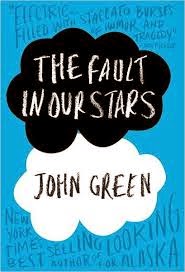
The fault in The Fault in Our Stars

I don't like The Fault in Our Stars.  I'm referring to the book.  I haven't seen the movie and I won't, since I didn't like the book and it doesn't have Spock.  I don't object to the author or plot.  I think John Green is a superlative writer and he tells an interesting story, which, although manipulative, is still rather touching.  My complaint is with the language that issues forth from the teenage protagonists' mouths.  "Colorful" might be one adjective for it, or "adult," or if my grandmother were here she might say, "uncouth!"  Whatever it's called, I don't like to hear it or read it, and I never use it.

I've heard the arguments; "That's how teenagers talk today.  Mr. Green was being realistic.  Those kids are dying a terrible death.  Their world stinks.  Profanity reflects that."  Hmm.  Maybe.  But I don't believe that a rotten world justifies or even requires rotten language.  In fact, if the world is truly so ugly, wouldn't beautiful language make it a little nicer place to be?

Heinrich Schütz would think so.  Schütz was born in 1585 in Germany to a family of innkeepers.  His musical talents were recognized early.  Accordingly he was sent to Venice to study composition, Venice being the most important city for composers at that time.  Upon his return to Germany he became the Kapellmeister (chapel master) for the Elector of Saxony in Dresden.  He was soon the preeminent composer in the area and was enjoying great success.  But life was not kind to Heinrich.  His beautiful wife whom he adored died after just 6 years of marriage, leaving him with two young daughters.  Then the Thirty Years' War descended upon central Europe, and madness reigned.  From 1618-1648 economic hardships, pillaging by soldiers, plagues, and anarchy were common.  Dresden suffered terrible deprivations.  Between 25-40% of the population of Germany died during this time.  Some communities lost two-thirds of their citizens.

And yet, Heinrich Schütz continued to compose exquisitely beautiful music.  Listen to Selig Sind die Toten (Blessed are the Dead).  Everything he produced during this brutal time praises his God and strives to elevate his gifts and talents to the highest.  Why didn't he succumb to the ugliness all around him and create something profane?

Words and music are powerful.  Ancient people understood this.  In the creation myths of Egypt, the sun, the earth, the moon, and all other objects came into being as Re spoke their name.  The Acoma people of New Mexico taught that two sisters sang a creation song to bring life to the earth.  The Samoans have a story about Tangaroa who spoke to a rock, bringing forth water, sky, maleness, femaleness, and ideas.  Christians believe that "in the beginning was the Word, and the Word was with God, and the Word was God," and that "the morning stars sang together" at the creation.

Words and music create worlds.  Heinrich Schütz knew this, and I wish the youth in The Fault in Our Stars knew it as well.  If your world is crumbling under the weight of terrible things (and everyone's does, at some point) the relief, the peace, the hope you are seeking lies in beauty, not profanity. And if we all worked harder at sharing a little more beauty despite our circumstances, we could create a new world, a world that would bless us all.

Heinrich Schütz


Tuesday, June 3, 2014

Frankly, my dear, I don't give a Spam.

Kim Kardashian and Kanye West finally wed.
...
...
...
...
Yup.  Can we move on now?  I would rather discuss something much more interesting.  Let's talk about Spam.

Spam has a fascinating history.  It is a "precooked meat product" invented by Hormel Foods in 1937.  It's ingredients include pork shoulder and ham mixed with potato starch, salt and preservatives.  It was widely distributed in WWII because it was so much easier to get a can of ham to the front lines than the whole pig.  After WWII Hormel organized a troupe of servicewomen to tour the country and promote the product.  The Hormel Girls had a radio show and a 16 piece orchestra to sing Spam's praises.  Today Hawaii has the largest per capita consumption of Spam in the United States and Hawaii, Guam, and the Marianna Islands have the only McDonald's with Spam on the menu.  It can be used in many recipes and in a variety of ways.  I have eaten the most delicious sushi rolls made with Spam.

So why the bad rap?  Spam gets no respect in the continental US.  It's mocked as "mystery meat" and looked down upon as poor man's food.  We even call unwanted email "spam."  What's going on?  I suspect it's the can.  You see, we know that meat doesn't really come in a can.  It seems fake, artificial, kind of rubbery or plastic.  It's coated in a gelatinous glaze, called aspic, which is a natural result of cooling meat stock.  Yet when we see that glaze we think, "Pigs don't have that.  And neither do chickens!"  Even though Spam can be dressed up into any number of delightful dishes, we don't really trust it.

Just like celebrity weddings.  The bride can have the biggest of diamonds, a Givenchy gown.  The groom can wear a custom designer tux and arrive in a Bugatti.  Throw in an exotic locale, let's say a private Caribbean island, or hey, even Florence, famous guests, outrageous quantities of food and drink, and we don't really trust it.  We can tell it's canned.  Everyone smiles, everyone claims to be "so happy."  Nonsensical platitudes spring from the mouths of well-wishers like daisies from graves; "They're so in love!  This is forever!  Soul-mates!"  We eyeball it suspiciously.  All this joy looks an awful lot like gelatinous glaze.

I've seen true joy.  It looks like a husband and wife, worried about finances, but trusting in each other that they will find a way.  It looks like a wonderful, weary mom who has just given birth to child number five because "there is always room for one more!"  It looks like children lovingly caring for parents with Alzheimer's.  It looks like neighbors helping to rebuild after a devastating tornado.  It looks like true friends helping a recovering addict or victim of abuse.  Conspicuously absent is the fame, the stardom, the glamor and glitz, the magazine covers.  True joy is the reward for persevering through hard work and great trials.  You can't buy it in a can.

Spam has a shelf life of 2-5 years.  Kim and Kanye, the clock is ticking...

Here is my tribute to the lovely couple, "It Must be Love!"


Tuesday, May 27, 2014

Pardon me! It's just my fartlek.

I like running.  I'm not very good at it.  A more precise description of what I do might be called "shuffling."  But I still enjoy it.  There's something about lacing up those hot pink running shoes and heading outdoors into the crisp morning that brings joy to my soul.  It's also an excellent time to compose new music.  While my feet pound on the pavement rhythms and melodic fragments organize themselves in my mind to come out on paper later.

I recently discovered fartleks.  Fartlek is a Swedish word that means "speed play."  It involves alternating face paced intervals with slower recovery intervals.  I've been running some fartleks lately.  I give it my all for one hundred paces, then huff and puff pathetically in the slower interval that follows.  This is especially true if that slower interval happens to come when I am chugging up a hill.  Then I resemble the Little Engine That Couldn't more than a champion marathoner.  Many times I've encountered another runner on such a climb, during the resting phase of my fartlek, and as they dash past with grace and élan I want to shout, "I can go much faster!  I'm on a fartlek!"  In my mind I plead with them to not think I'm lazy due to my slow pace.

This has caused me to ponder the fartleks in our lives.  We all have times of success, prosperity, of moving towards a goal.  Then there are those periods of seeming stagnation and hopelessness.  The British composer Edward Elgar is a good example of this.  Born into a working class home in 1857, he worked diligently to overcome the class prejudices of Victorian England.  His modest success in the 1890's was crowned with a true masterpiece in 1899 with Variations on an Original Theme, more commonly called The Enigma Variations.  The Nimrod variation alone is so beautiful it defies description.  Numerous other outstanding compositions followed in the years to come, including one of the most well-known pieces in the United States, Pomp and Circumstance No. 1.  If you've attended any graduation, ever, you've heard it!

By 1912 Elgar was lauded and praised all over the world.  He was enjoying a fast fartlek interval.  But then World War I began, and Elgar became depressed and discouraged by the conflict.  He saw and understood that the British Empire, of which he was fiercely proud,  was on the wane.  He also recognized the dying gasps of the European Romantic music tradition, and knew he didn't belong to the new modernism that was rising.  Deeply troubled, he wrote no significant works for many years.  No doubt there were critics who judged him to be "finished."  Yet Elgar defied them all.  In 1919, with a burst of speed in a brilliant creative fartlek, he composed the Cello Concerto in e minor, and the cello canon has never been the same.  It is magnificent.  If he had composed nothing else, that concerto alone would have guaranteed his fame.

So let us look kindly on others who appear to be slow, unsuccessful, lost, or bewildered.  Let us help and encourage those who are on a "resting phase" and need to recharge.  Let us never confuse the recovery period of a fartlek with stupidity, laziness, or failure.  Do not judge.  The most glorious creation you can ever imagine may be just around the corner.


Sir Edward Elgar


Wednesday, May 21, 2014

Life is a Beach.

"Life is too short to even care at all," sang the band Young the Giant this morning as we listened to my daughter's iPod on our morning commute.  They repeated it over, and over, and over again, concluding with a line about the merits of cough syrup.  I finally asked my daughter, "What is this song about?"  "I'm not sure," she replied, "Maybe suicide?"

I'm not sure, either, but if I really believed the philosophy they seem to be peddling, I'd want to commit suicide, too.  Planet Earth can be a rather depressing place.  Interspersed with the laments of Young the Giant I heard an NPR update on the sinking of the Korean ferry, 285 bodies recovered to date, most of them teenagers.  I also heard news about the Turkish mine disaster, the last of the 301 victims was buried on Sunday.  Flooding in the Balkans, Putin posturing, political attack ads.  What good does it do to "care at all" in the face of such overwhelming tragedies?  I might have some hope of making a difference if I were a doctor, a nurse, a journalist, or even a sincere politician (an endangered species), but I'm a musician, a composer, the most useless of all professions at solving world crises.

Mrs. H. H. A. Beach was also a composer at a time of turmoil and uncertainty.  Born Amy Marcy Cheney in 1867, she grew up in Boston and became the first accomplished and critically acclaimed female composer in the United States.  Upon her marriage to the prestigious Dr. Henry Harris Aubrey Beach her career as a concert pianist was severely curtailed as it was not considered appropriate for a lady to be in the public eye.  However her husband did encourage her to compose and she had great success with chamber music, large scale symphonic works, choral and vocal music.  When her husband died in 1910 she resumed her concert career by touring Europe.  That came to an end with the onset of World War I.  As she watched the tragedy of a brutal conflict unfold, she too may have wondered, "What good is my music in the face of such devastation?  Why should I care at all?"  And yet, she did.  She continued to compose beautiful pieces that uplift and inspire.  Listen to this beautiful Berceuse for Cello and Piano or the Theme and Variations for Flute and Strings.   She didn't limit her contribution to composing.  She became a teacher, mentor, and champion for other composers, particularly women, who needed encouragement and support to further their careers.  She was active in important educational organizations that helped young musicians struggling to make their way in difficult times.  At a time when it would have been easy to say "I am one person.  I can do nothing," Amy Beach did everything she could.

I'm going to resist the seductive call of Young the Giant.  I think life is too short to not care.  What can I do?  I know a teenage girl who is rebelling against her parents.  She's a pianist.  I'm a pianist.  She likes Chopin, Debussy, and Bach.  So do I.  We've played some duets together and she's asked me to show her some of my own music.  I'm just a composer, but perhaps a composer is the right person to reach this lost child.  I can't save the children on the Korean ferry.  Maybe I can save one girl from making decisions she will later regret.

How about you?  Will you care?

It's a better choice than cough syrup.


Amy Cheney Beach

Young the Giant


Tuesday, May 13, 2014

Oh Noah, you goah, all the way back to the protozoa!

I heard through the grapevine there's a recent Hollywood epic with a vaguely Biblical story and a really big boat.  I haven't seen it as I prefer my movies to have either subtitles and a fantastic score by a composer with an unpronounceable name, or Mr. Spock.  This movie fails on both accounts, so I will save my meager funds and attend the opera instead.  Despite my appalling lack of interest, I have become quite aware of all the hoopla and controversy swirling around the movie.  Christians on the right screaming, "Aronofsky's an atheist!  It makes a mockery of the Bible!"  Christians on the left screaming, "Who cares there's no rock monsters in the Bible? At least mainstream Hollywood made a Biblical epic!  That hasn't happened since Cecil B. deMille!"  Critics down the middle throwing out the usual platitudes, "Compelling, gut-wrenching, visually stunning," blah blah blah.  And of course, they all miss the point.

Just get on the boat.

Isn't that what the story of Noah is all about?  Whether you believe it to be literal or allegorical, or even downright fiction, you need to get on the boat.

I read an excellent interview with Darren Aronofsky.  He mentioned a fear he had as a child, "What if I was not one of the good ones to get on the boat?"  But this is the beauty of the tale, everyone had a chance to get on the boat.  Every living soul got to choose for themselves if they wanted to be one of the "good ones."  And it took a long time to build the ark.  How long?  Who knows?  Bible scholars claim anywhere from 40 years to 120 years.  Even at the short end of 40 years that's plenty of time for someone to ponder, "Hmm, look at Noah, working hard.  I wonder if I need to get on that boat?"

There are lots of boats in our lives, major and minor, and they all require a leap of faith to get on board.  Going to college, moving to a new city, trying a new hobby, choosing different friends, different faith, different family, they all demand some degree of courage, a willingness to say, "I wonder what it would be like to catch that boat?"

The painter Édouard Manet was expected to enter law, like his father.  What if he had never learned to paint?  The composer Sergei Rachmaninoff struggled with depression.  If he hadn't tried hypnosis, which helped him a great deal, we wouldn't have the magnificent Piano Concerto No. 2.  And where would we be if Anjezë Gonhxe Bojaxhiu didn't have the courage to leave her home in what was then Yugoslavia, never to see her family again?  The world would be a poorer place, indeed, without Mother Teresa.

How long are you and I, and each one of us, going to stand around and watch someone else build a magnificent boat, or a magnificent home, or a magnificent life?  We don't need to be bystanders.  We can be participants in the great adventure of life.  Believe that you belong on the boat, you are one of the "good ones."  Take a big breath and

jump.

The Grand Canal of Venice
by Manet

Noah